
SETTING A BUDGET FOR YOUR NEW GARDEN
In our article How much does it cost to build a garden?, we talked about the main factors to consider when calculating the cost of creating a new garden. Here we’re going to focus on setting a budget and how to manage and reduce those costs if necessary.
THE QUESTION OF BUDGET WHEN BUILDING A GARDEN
Is it worth setting a budget at the outset of your garden design journey? This may sound like a silly question, but there is no set answer! Roughly half of our clients come to us with no fixed budget in mind. Some want us to explore the full potential of the site without budgetary constricts, and then, with sight of the drawings, address the question of budget. For many, having a garden designed is a once-in-a-lifetime experience, and because of this, they prefer to ’see’ their dream garden on paper first and then find the funds to make it happen. And this is fine, of course.
However if you have an idea of how much you’re willing to spend, a definitive ‘ceiling’, then it is definitely worth stating at the outset, so the designer can keep this in mind. Good designers will not set out to overspend, but a client who provides a very long wish-list and no steer on budget may be in for a shock! Designing to a budget should mean just that, no unwanted surprises. It also allows the designer to flag early on if the budget and brief are not aligned – sometimes it’s better to have that conversation from the outset.
MANAGING THE COST OF CREATING A GARDEN
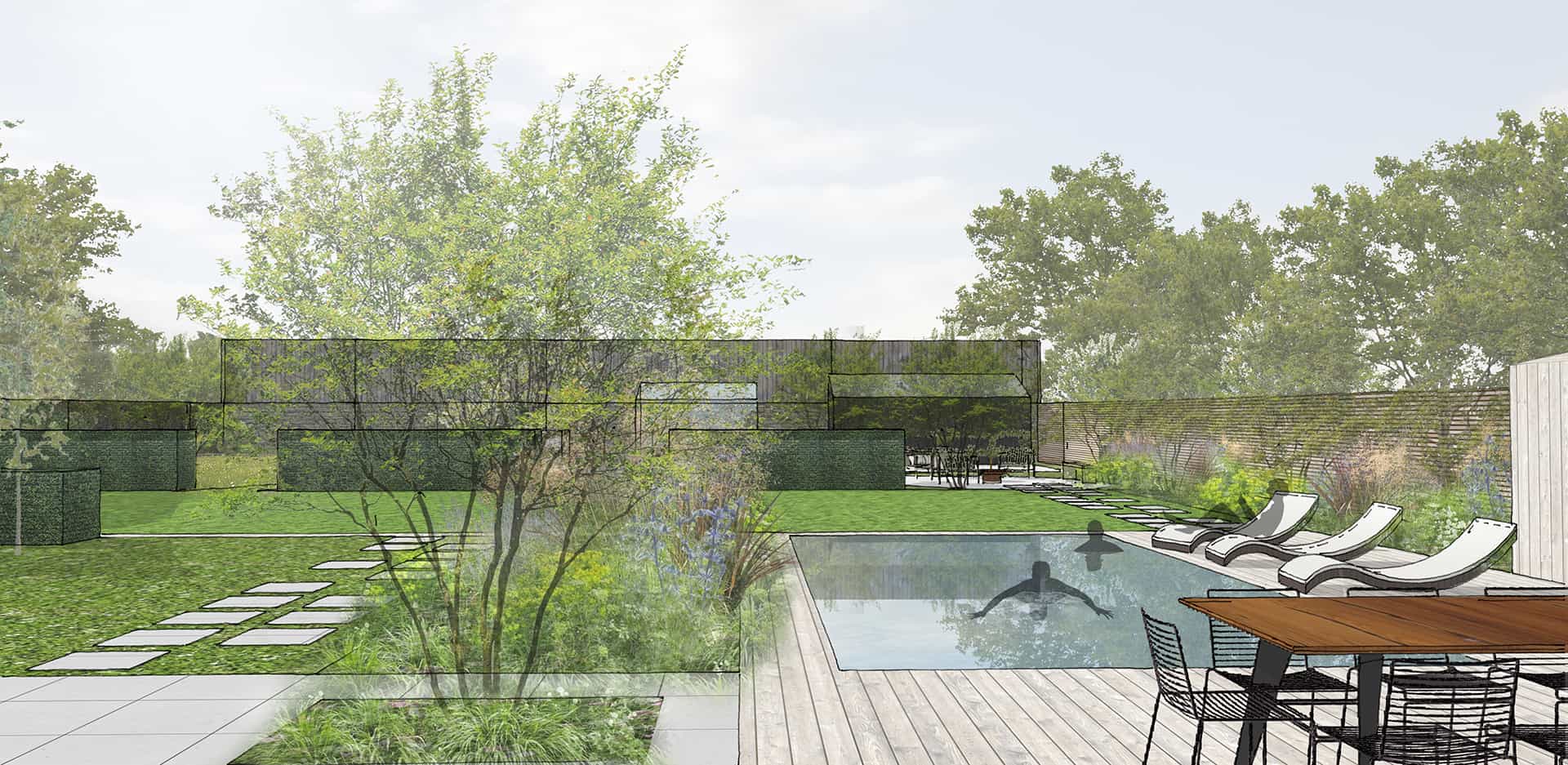
There are of course ways of managing costs when it comes to budgeting for your new garden. If you don’t have the funds to hand immediately, but you’re willing to wait, then there are ways of making it happen. A garden should be an investment for the long-term, it’s something that can evolve with the changing needs of a family as it grows and therefore it doesn’t necessarily all have to be ‘done’ at once. This isn’t interior design. If you’re living in your forever home and there is no hurry to complete the build within a set timeframe, then we advise a phased approach if budget is an issue. It’s important that a garden designer factors in the entire site in producing a cohesive design, however the build itself can be strategically implemented over a period of years, even decades. A good designer should be able to design with this in mind, zoning the site in the most cost-efficient way, so don’t be afraid to ask!
REDUCING THE COST OF THE BUILD DURING THE GARDEN DESIGN
A light touch with the hardscape always serves to reduce costs – that may mean ‘break out’ areas of paving to accommodate seating, rather than extravagant terraces or solid stone paths. Gravel or self-bind gravel, two of the most cost effective ‘hard’ materials, can be useful in reducing cost on a build. A higher ratio of planting to hardscape will also help, as will a material palette chosen with budget in mind. Although there are so many materials out there, a garden designer should understand the comparative costs and factor this into their recommendations. Reusing materials already on site will also help make savings – whether it be reusing good quality stone paving slabs or mature plants that are in good condition. Sowing seeds or planting plug plants will also save on outlay, though they will take longer to establish than more mature plants in two litre pots and require more nurturing initially. For the right site – and the right client- these can be very successful.
The ongoing cost of maintaining the garden should also be discussed at the outset, as this will also inform the design process. For instance the type of garden we create for a client who intends to employ a gardener or wants to devote their retirement to the tending the plants, is inevitably different to one commissioned by a busy working family with no budget to employ additional help. Factors like irrigation should also be considered – for instance, specifying moisture loving plants for free draining soil or an area that gets parched for six months of the year will inevitably require more irrigation, raising the ongoing maintenance costs.
HOW TO FUND A NEW GARDEN
There are all sorts of ways to fund a garden re-design, whether it be through personal savings, a bank loan or by extending your mortgage. Some clients have told us that they’ve taken advantage of low interest rates in the current climate to do just this. There are a range of ecological grants out there for larger sites, depending on your intentions for the project. We can advise on this on a case by case basis.