
Prolandscaper Magazine, November 2024
A Hidden Gem
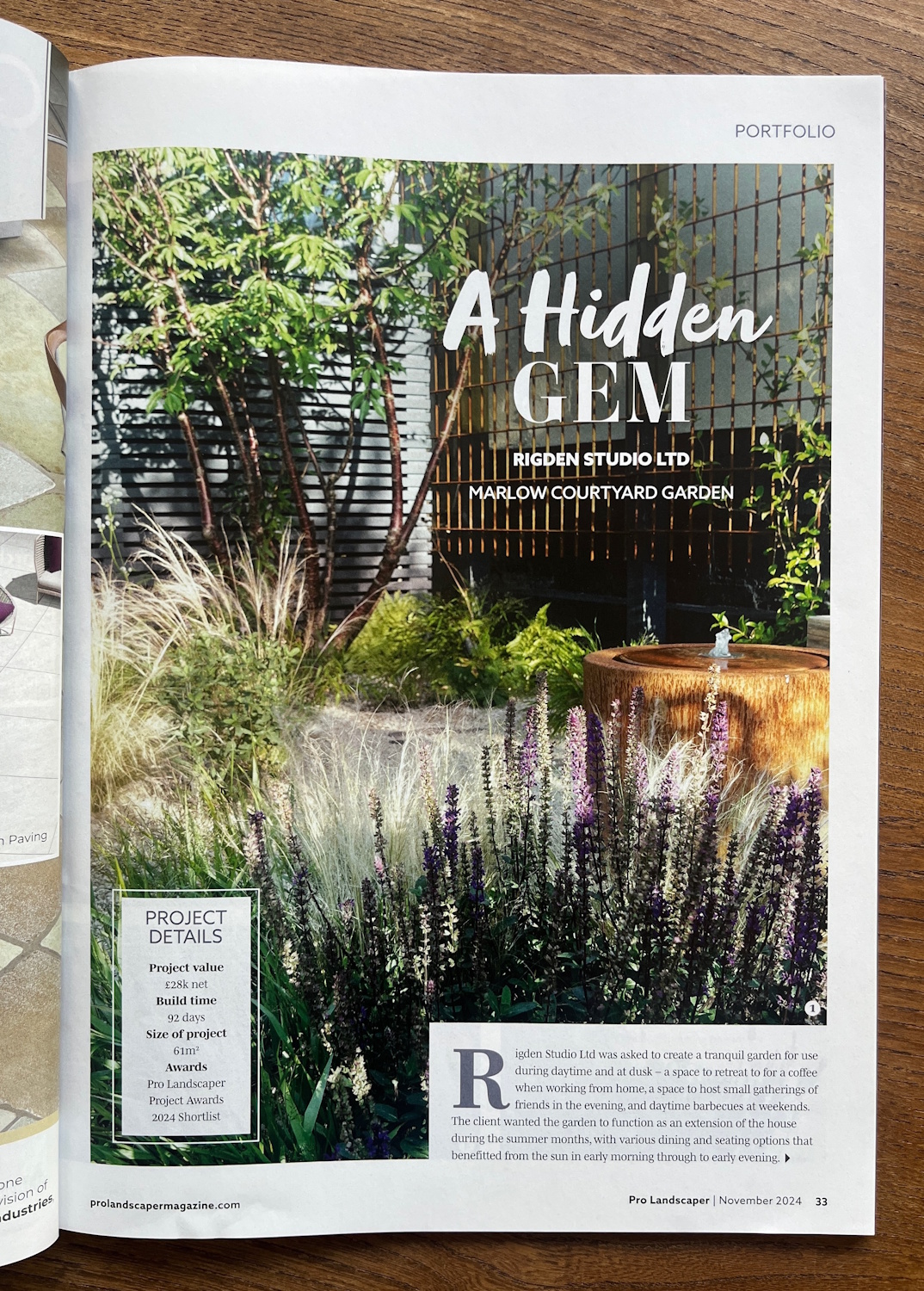
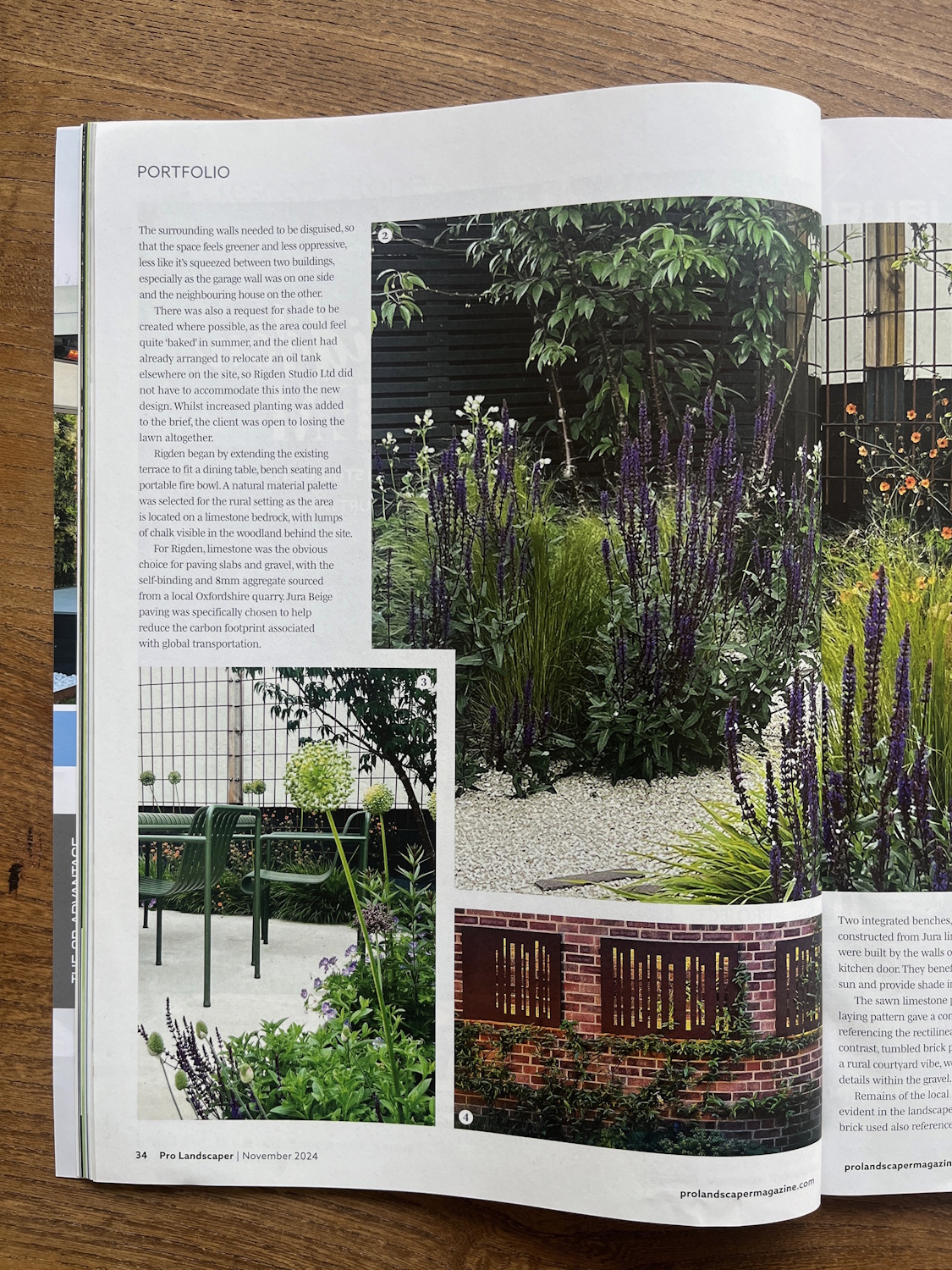
Featured in Pro Landscaper, this small rural courtyard garden near Marlow was designed to become a tranquil extension of the house – a place to work from home, entertain friends and enjoy outdoor dining throughout the summer. The challenge was to make a relatively enclosed space feel green, spacious and connected to its rural surroundings, while disguising the neighbouring walls and providing shade from the intense summer heat. With the client open to losing the lawn, I was able to give planting a much more prominent role in the design, creating a garden that feels generous despite its compact size.
Creating a sense of space
The feature explores how thoughtful garden design can make the most of a small space. The existing terrace was extended to create room for dining and seating, with locally sourced limestone and gravel chosen to reflect the chalk and limestone landscape beyond the garden.
Making every element count
The clean lines of the limestone paving reference the architecture of the 1960s house, while brick details and warm-toned Corten steel bring a more informal, rural character. Bespoke screens and a water feature add interest, while multi-stemmed trees provide height and dappled shade.
The result is a contemporary courtyard garden that combines a simple architectural framework with generous, naturalistic planting – an approach that works particularly well in smaller gardens where every element needs to earn its place.
Planting for year-round interest
Planting was central to the design, both to soften the surrounding walls and to make the garden feel more secluded. The scheme deliberately combines woodland-edge planting in the more shaded areas with a drier, Mediterranean-inspired character in the sunnier parts of the garden.
A restrained colour palette and emphasis on texture give the planting a calm, cohesive feel, while multi-stemmed trees and evergreen structure provide interest beyond the main summer season. The planting was also designed to increase biodiversity, providing food and habitat for birds and insects. Sustainability was considered throughout the project, including reusing the existing terrace base, incorporating excavated material into the new terrace and sourcing hard landscaping materials with their carbon footprint in mind.
The finished garden is a good example of my approach to small garden design and planting-led design: a contemporary, naturalistic garden that feels rooted in its rural setting, with enough structure and detail to make a compact space feel much larger.
You can see the full project here

Prolandscaper Magazine, November 2024
Marlow Courtyard Garden Prolandscaper 2024
Prolandscaper Awards 2024 Magazine Feature

Tabitha Rigden Prolandscaper Award 2024
