
DON’T FORGET THE BEES
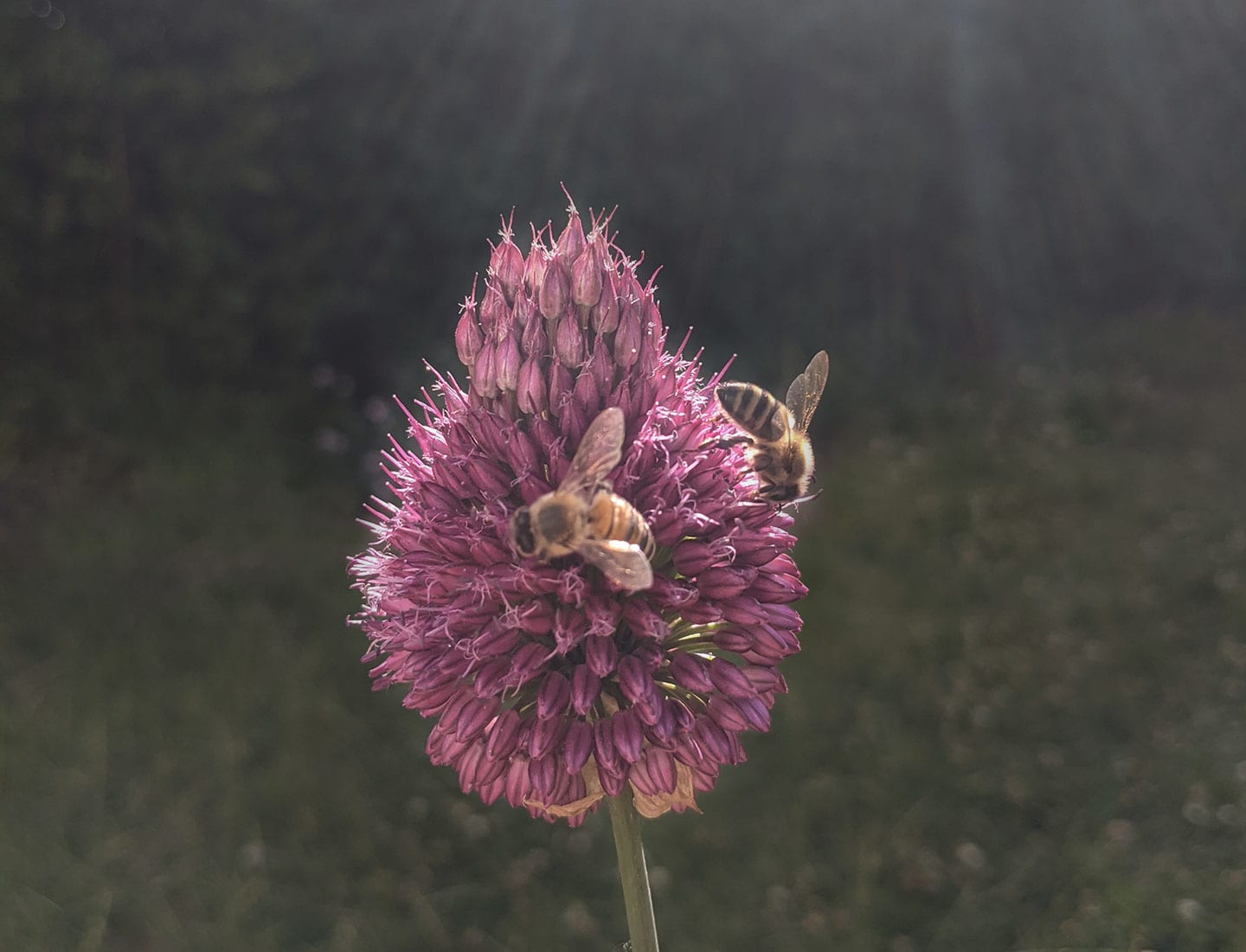
Providing food sources for pollinating insects through the plants we grow is so important. Why? Because mammals (yes, humans too) rely on insects to pollinate plants to bear fruit for food. Native bees are under threat from pesticide use and habitat loss, so choosing the right plants can help their situation. For instance open-flowering species provide easier access to nectar, where as the petals in double varieties make it difficult to access. Choosing a variety of flower shapes promotes insect diversity. For instance the tubular flowers of the fox glove are attractive to long-tongued bees like the common cardar bee. Shallow flowers like hardy geraniums are required by short-tongued bees, and hoverflies like the flat forms of the daisies and umbellifers.
Nectar is very important as an energy source for insects, but pollen is also key as a source of protein. Pollen is used to feed to young grubs, and helps lay the groundwork for a healthy adult insect. Certain flowers provide higher quality pollen than others and those from the legume family including clover, beans and vetches have been shown to be the best.
It’s also worth extending the flowering season beyond summer to provide food for pollinators throughout the year, something we do in all our schemes. Look for pollinator-friendly plants, which have long flowering periods, and don’t forget the other seasons. For Spring, plant bulbs like crocus and snow drops and choose trees with blossom. Even the colder months can be catered for with a winter-flowering shrub which can feed an emerging bee on a sunny day.