
RAIN GARDEN BORDER – BELVOIR CASTLE FLOWER SHOW 2020
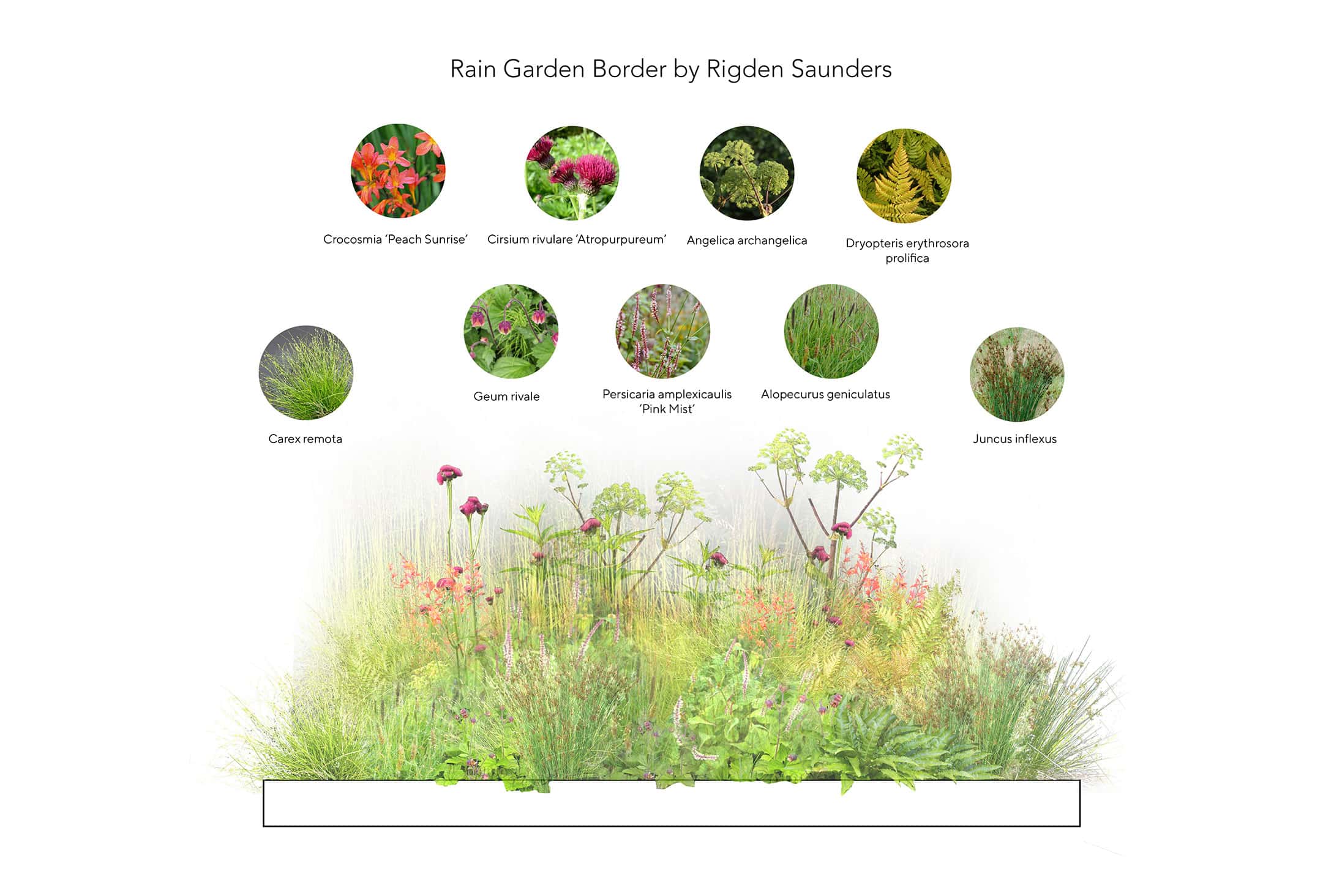
Rain Garden Border designed by Tabitha Rigden in collaboration with Helen Saunders. This was one of six borders selected to be built at the Belvoir Castle Flower and Garden Show in September 2020. Flooding in the UK this winter prompted us to design a planting scheme to help alleviate the effects of heavy rainfall at a local level. Inspired by the plant communities we found in countryside swales whilst exploring North Wales, the Rain Garden Border consists of plants selected for permanently moist ground found at the bottom of a swale, with more drought tolerant species further up the slope. Native wild species like Geum rivale, Carex remota and Alopecurus geniculatus are interspersed with exotic garden stalwarts like Crocosmia and Persicaria amplexicaulis for wow-factor, demonstrating how the two could be combined to absorb water run-off and increase biodiversity in a summer garden border.
The border got a great response from the public, who loved the wild feel of it, as well as the warm end-of-summer palette and the movement from the grasses. Thanks goes to London College of Garden Design for sponsoring the Countryside Border competition and the show organisers for pulling off one of the only garden shows – socially distanced of course – to go ahead in the year of lock-down!

The Autumnal colours looked stunning bathed in the September sunshine, with Crocosmia ‘Emily McKenzie’ and Persicaria amplexicaulis ‘Blackfield’ in particular drawing a lot of attention, the former bringing an exotic touch to the naturalistic swale – inspired border.
For us this was about choosing plants for a purpose – a functional scheme that would challenge notions of traditional planting design. Moisture-loving plants were positioned at the base of the bank and more drought tolerant species further up.
As we hoped, the border was also enjoyed by a multitude of pollinating insects, showing that beautiful planting design can benefit wildlife and people alike.
