
INVEST IN YOUR GARDEN, INVEST IN YOUR MENTAL HEALTH
Having so far experienced three national lockdowns, and having spent more time in our immediate surroundings than ever before, many of us now truly appreciate the value of having a garden. The garden has become the view from work, the place to escape to for a tea break, or even the office itself – whether relocating to sit beneath the shade of a tree or working from a purpose-built garden room with functioning wifi and electric kettle. If you’re lucky enough to own a garden, you may now feel that it is worth investing in a re-design, or at least reviewing a particular area of planting.
GARDENS – REDUCING STRESS AND ANXIETY
Having lived life in the slow lane this past year, we have learnt to appreciate the small things, the things on our doorsteps. The roads are emptier, with rush hour largely non-existent in many places, and the skies are much quieter too, with the reduction of air travel. In fact, it has become easier to reconnect with nature, with wildlife and birdlife becoming literally more visible (and audible). And less time spent commuting has enabled many people to spend more time in their gardens.
So, is it true that gardens can improve mental health and wellbeing? Those of us with a garden will attest to the fact that it has proved a real spirit lifter in this time of crisis – the garden is an escape, a haven, an oasis from the stresses and anxieties of daily life. For many, gardens hold a nostalgic comfort – memories of parents or grandparents – of a world that was less frenetic, when people seemed to have the time to, well, garden.
FOREST BATHING
Humans find an innate comfort in nature, research tells us that this is a primal instinct hard- wired into our DNA . The Japanese practice of shinrin yoku (or ‘forest bathing’) – bathing that is, in the atmosphere of the forest – is a form of mindfulness that involves tuning in to what you see, hear, smell or touch. It is proven to be an effective stress buster, reducing cortisol levels, lowering blood pressure and adrenaline. This will come as no surprise to those of us lucky enough to have access to woodland; it is certainly one of the most restorative environments I can think of.
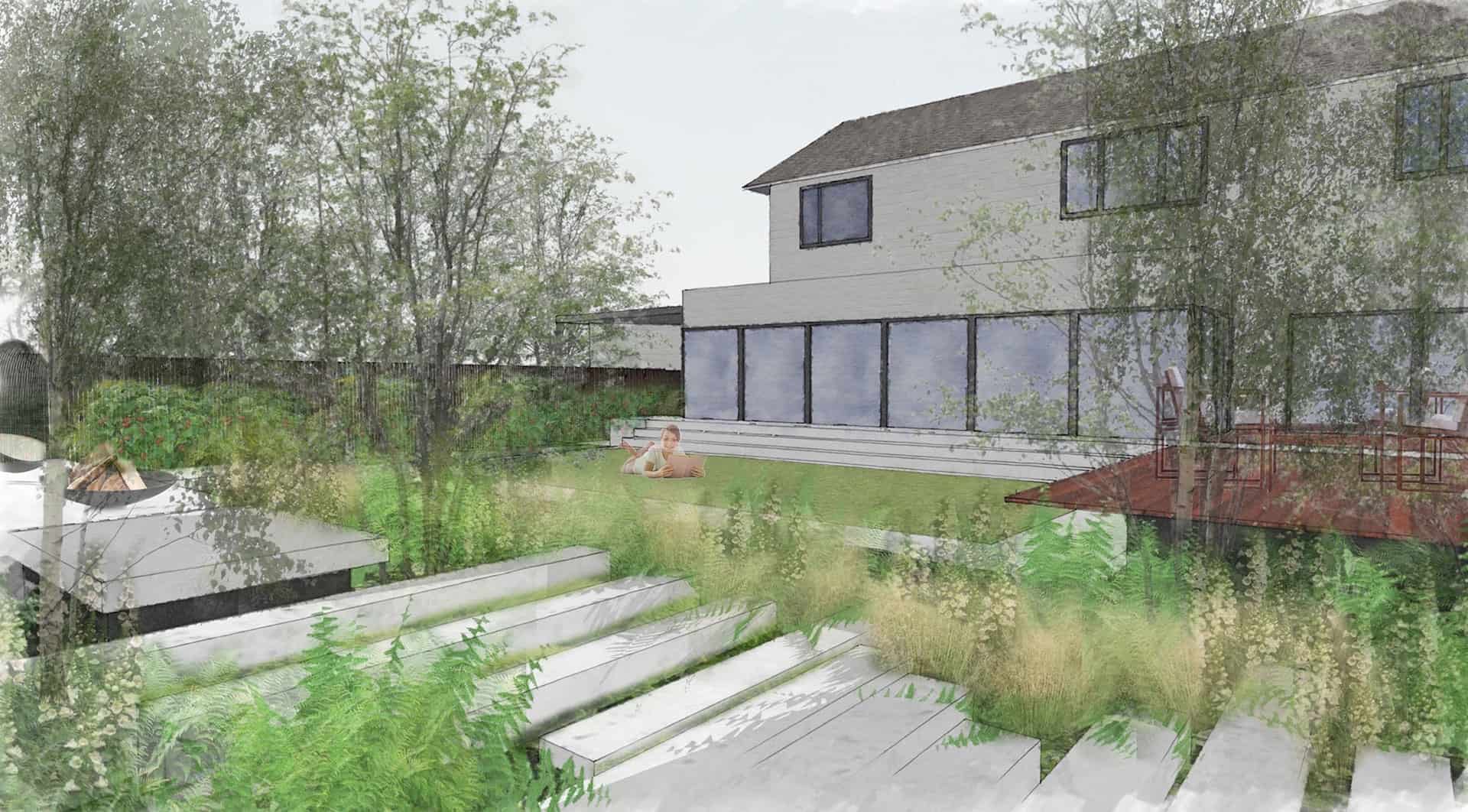
The good news is that we can bring a piece of this magic into our own gardens; the de-stressing process can start when we step out the back door and into our very own Eden. And I’m not simply referring to a patch of lawn and a garden shed, but the flow and balance that comes with good design, and the sensory experience provided by a particular combinations of plants – colour, texture, smell and sound, or a combination of all four. By considering the type of landscape that relaxes the senses (like the woodland, for instance) and distilling its essence into the garden, you can draw from it the same benefits as you would in the wider landscape.
GARDENING FOR MENTAL HEALTH
’Green therapy’ – the act of gardening itself – is fast becoming a recognised tonic for those who suffer stress, anxiety or depression. The mental health charity Thrive cite mounting evidence that gardening can also alleviate the symptoms of dementia, increase the ability to concentrate and engage, and reduce self-harming behaviour and dependence on medication. There are a multitude of urban community gardens tended by volunteers who have been prescribed this particular ‘medicine’ by their GPs. Within a community setting, the act of gardening can allow people who have suffered from isolation to more easily socialise and gain the satisfaction of contributing to something worthwhile. Planting plants or sowing seeds is an investment in the future, something to look forward to. That sense of being part of something larger than ourselves can make worries and anxieties feel less significant.
AN ACT OF MINDFULNESS
An article in the American journal Psychology Today explains that gardening lends itself to the practice ‘mindful presence’ (or mindfulness, as it’s more commonly called), which can bring about higher levels of satisfaction and less emotional reactivity. The absorbing and methodical nature of gardening can help us to enter this state, and in doing so, escape our everyday worries. It also encourages a ‘growth mindset’, learning constantly from what we do – a healthy antidote to perfectionism and the need to be entirely in control.
GARDENING FOR PHYSICAL HEALTH
And there there are the physical effects of gardening, used as physiotherapy for many. It provides low-impact exercise that anyone can take part in, regardless of their physical fitness. And we all know that exercise releases endorphins in the brain that boost mood and lower anxiety. Combine that with fresh air and you’re onto a winner. Gardening connects us to nature, to the elements. It brings about an awareness of frosts, of rain, of temperature and sunlight, and ultimately the cycle of the seasons.
Having now rediscovered our gardens, it is unlikely that we’ll forget them in a hurry. Our gardens are here to stay and there has arguably never been a better time to invest in them.